The art of antique restoration has entered a new era with the advent of selective electrolytic preservation techniques for gold artifacts. Unlike traditional methods that often strip away centuries of history along with the tarnish, this innovative approach allows conservators to meticulously clean precious metal objects while preserving their authentic patina—the very soul of their historical value.
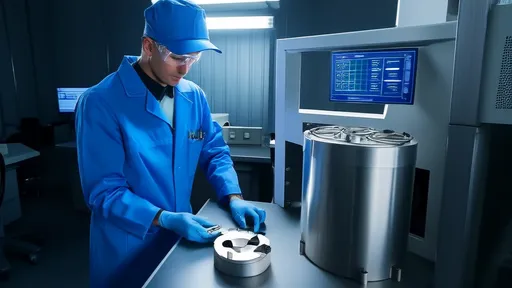
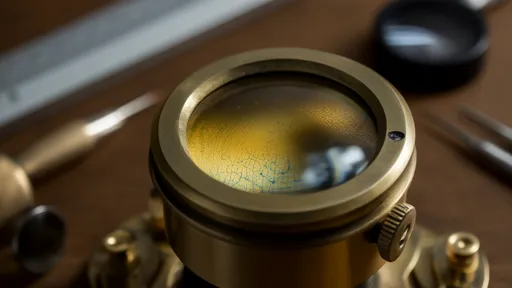
At the heart of this breakthrough lies a sophisticated understanding of electrochemical reactions. Conservators now employ precisely calibrated electrolyte solutions that target only corrosion products without attacking the underlying gold or its natural oxidation layers. The process begins with microscopic analysis of the artifact's surface composition, mapping areas requiring intervention versus those where patina must remain untouched.
What makes this technique revolutionary is its ability to discriminate between desirable and undesirable surface alterations. Where conventional electrolysis would indiscriminately remove all oxidation, the selective method uses organic complexing agents that bind specifically to chlorides and sulfides—the destructive corrosion compounds—while leaving benign oxides intact. This scientific precision transforms restoration from a blunt instrument into a surgical tool.
The implications for museum conservation are profound. Institutions housing ancient gold artifacts face an eternal dilemma: preserve objects in their current state with all accumulated damage, or risk losing historical authenticity through aggressive cleaning. Selective electrolysis resolves this paradox by offering a third path—one that removes harmful degradation while safeguarding the visual narrative of age and use that gives antiquities their character.
Practical applications have already demonstrated remarkable success. A recent treatment of a 4th-century BCE Thracian ceremonial cup at the Sofia Museum of Archaeology revealed astonishing detail beneath centuries of grime, while maintaining the subtle variations in surface texture that testify to its authentic age. Similarly, Byzantine liturgical objects from the Istanbul Archaeological Museum collection have undergone treatment with unprecedented preservation of their original gilding patterns.
Beyond museum conservation, the technique shows promise for private collectors and auction houses. The ability to stabilize deteriorating gold items without compromising their patina—and thus their provenance and value—represents a game-changer for the antiquities market. Ethical concerns about over-restoration have long plagued the trade; selective methods provide a scientifically validated approach that satisfies both preservation standards and commercial requirements.
The development of these techniques didn't occur in isolation. Advances in materials science, particularly in understanding nanoscale surface interactions, combined with improved electrochemical monitoring equipment, made such precision possible. Modern potentiostats can now maintain voltage within millivolt tolerances across irregular artifact surfaces, while spectroscopic analysis guides the process in real-time.
Challenges remain, of course. The method requires extensive expertise to execute properly—an incorrect electrolyte formulation or current density could still damage delicate surfaces. Treatment times often exceed conventional methods, sometimes requiring weeks of careful monitoring for particularly valuable or complex pieces. However, as the technology becomes more widespread, standardized protocols are emerging to make the technique more accessible to conservation laboratories worldwide.
Perhaps most exciting are the future possibilities this approach unlocks. Researchers are exploring adaptations for silver and copper alloys, potentially revolutionizing preservation across entire categories of metallic antiquities. Other teams investigate whether similar selective principles could apply to non-electrolytic cleaning methods, possibly leading to gentler alternatives for organic materials or composite artifacts.
As with any significant advancement in conservation science, ethical debates accompany the technical progress. Some scholars argue that even benign intervention alters an object's historical integrity, while others counter that stabilization against ongoing decay represents responsible stewardship. The selective electrolysis method at least provides a middle ground—minimal necessary intervention with maximum respect for the artifact's material history.
The story of antique gold restoration continues to evolve, but one thing seems certain: the days of choosing between preservation and cleaning are ending. With selective electrolytic techniques, conservators can now protect cultural heritage while revealing its hidden beauty—not by rewriting history, but by carefully editing its damaged passages to let the original narrative shine through.

By /Aug 19, 2025
By /Aug 19, 2025

By /Aug 19, 2025
By /Aug 19, 2025

By /Aug 19, 2025

By /Aug 19, 2025
By /Aug 19, 2025

By /Aug 19, 2025

By /Aug 19, 2025

By /Aug 19, 2025

By /Aug 19, 2025
By /Aug 19, 2025

By /Aug 19, 2025

By /Aug 19, 2025
By /Aug 19, 2025

By /Aug 19, 2025

By /Aug 19, 2025

By /Aug 19, 2025

By /Aug 19, 2025

By /Aug 19, 2025
