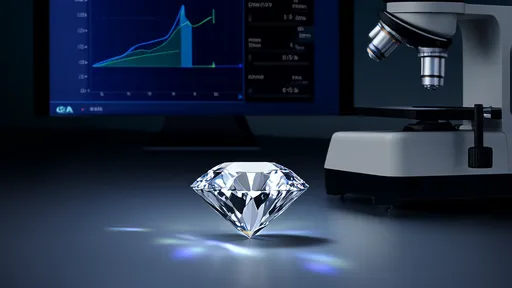
The Gemological Institute of America (GIA) has long been the gold standard in diamond grading, and its latest update to the clarity plotting system for lab-grown diamonds marks a significant evolution in how these stones are documented and understood. The new GIA clarity plotting diagrams provide unprecedented detail about inclusions and growth characteristics unique to synthetic diamonds, offering both traders and consumers deeper insights into what makes each stone distinct.
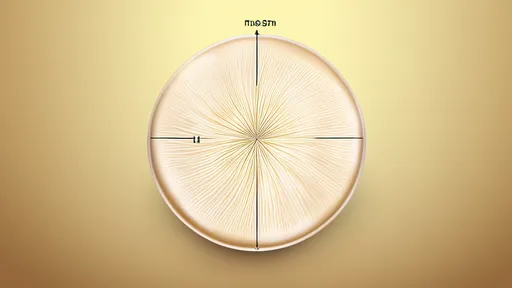
Unlike traditional diamond certificates that simply note clarity grades, the revised GIA reports now feature intricate graphical representations of a stone's internal landscape. These visual maps don't just identify inclusions—they reveal the telltale patterns of chemical vapor deposition (CVD) and high pressure high temperature (HPHT) growth methods. For industry professionals, this means being able to trace a diamond's origin story through its imperfections.
The shift toward greater transparency comes as lab-grown diamonds claim an increasing market share. Where once these stones might have been dismissed as mere simulants, they now command serious attention from both jewelers and collectors. The GIA's updated reporting system acknowledges this changing landscape by giving lab-created diamonds documentation that rivals what natural stones receive. Each inclusion plotted on these new diagrams tells a story about the diamond's journey from raw carbon to polished gem.
What makes the new clarity plots particularly fascinating is how they highlight the fundamental differences between mined and lab-grown diamonds. Natural diamonds form under chaotic geological conditions over billions of years, resulting in unpredictable inclusion patterns. Their lab-created counterparts develop under controlled circumstances, producing distinctive internal features that trained gemologists can use to identify their synthetic origin. The GIA's updated system makes these differences visually apparent for the first time.
For consumers, the enhanced clarity diagrams serve multiple purposes. Beyond simply verifying a diamond's lab-grown status, they provide assurance that the stone has undergone rigorous examination. The detailed plotting of inclusions also helps buyers understand exactly what they're purchasing—no small consideration when investing in larger carat weights. Some industry observers note that these comprehensive reports may actually increase buyer confidence in synthetic diamonds by demystifying their characteristics.
The practical implications for jewelers are equally significant. With these new reports, sales professionals can show customers precisely where and how a diamond's clarity grade was determined. Being able to point to specific inclusions on a diagram makes abstract clarity grades like VS1 or SI2 suddenly concrete. This level of transparency could transform how lab-grown diamonds are marketed and sold at retail counters worldwide.
Interestingly, the updated system also sheds light on technological advancements in diamond synthesis. As growing techniques improve, the inclusion profiles of lab-created stones change accordingly. The newest generation of CVD diamonds, for instance, shows markedly different internal characteristics compared to those produced just five years ago. The GIA clarity plots effectively document this evolution, creating an archive of how synthetic diamond quality has progressed over time.
Some industry veterans have noted that the revised reporting may influence pricing structures for lab-grown diamonds. Stones with cleaner growth patterns or more aesthetically pleasing inclusion arrangements could command premiums, much as their natural counterparts do. The clarity diagrams provide visual proof of these qualitative differences, potentially creating new value categories within the synthetic diamond market.
The educational value of these new reports shouldn't be underestimated either. Gemology students now have access to detailed documentation showing exactly how inclusions manifest in lab-created versus natural diamonds. This resource could accelerate expertise in identifying synthetic stones—a crucial skill as the market continues to evolve. The diagrams also serve as valuable research tools for scientists studying diamond growth processes.
Implementation of the new system hasn't been without challenges. Some smaller retailers have expressed concerns about explaining the technical aspects of these reports to customers. There's also the matter of training sales staff to properly interpret and communicate the information contained in the updated certificates. However, most industry leaders agree these growing pains are worth enduring for the long-term benefits of standardized, detailed reporting.
Looking ahead, the GIA's initiative may prompt other grading laboratories to enhance their own reporting systems for synthetic diamonds. As competition in this space intensifies, comprehensive documentation could become a key differentiator between grading entities. The ultimate winners in this scenario are consumers, who gain access to more information than ever before when making purchasing decisions.
The introduction of these detailed clarity plots represents more than just a technical update—it signals a maturation of the lab-grown diamond sector. By applying the same rigorous documentation standards to synthetic stones as to natural ones, the GIA is helping to normalize these products within the broader gem market. This move may well be remembered as a turning point in how lab-created diamonds are perceived and valued.
For collectors and investors, the new reports provide something previously lacking in the lab-grown diamond market: provenance. While these stones will never have the geological history of natural diamonds, their growth characteristics and inclusion patterns now tell a documented story of human achievement. In its own way, this represents a new kind of rarity—not measured in billions of years, but in technological precision and innovation.
The GIA's updated clarity plotting system ultimately bridges the gap between scientific understanding and commercial application. By making the microscopic world of diamond inclusions visible and comprehensible, these reports add tangible value to every certified stone. As the lab-grown diamond market continues to expand, such robust documentation will likely become not just valuable, but essential.
By /Aug 19, 2025
By /Aug 19, 2025

By /Aug 19, 2025
By /Aug 19, 2025

By /Aug 19, 2025

By /Aug 19, 2025
By /Aug 19, 2025
By /Aug 19, 2025

By /Aug 19, 2025
By /Aug 19, 2025

By /Aug 19, 2025
By /Aug 19, 2025

By /Aug 19, 2025

By /Aug 19, 2025
By /Aug 19, 2025
By /Aug 19, 2025

By /Aug 19, 2025
By /Aug 19, 2025

By /Aug 19, 2025

By /Aug 19, 2025
